Your Cabin Needs a House Manual
Tired of texting guests where the breaker box is? A one-page house manual saves you the repeat questions and makes everyone's stay smoother.
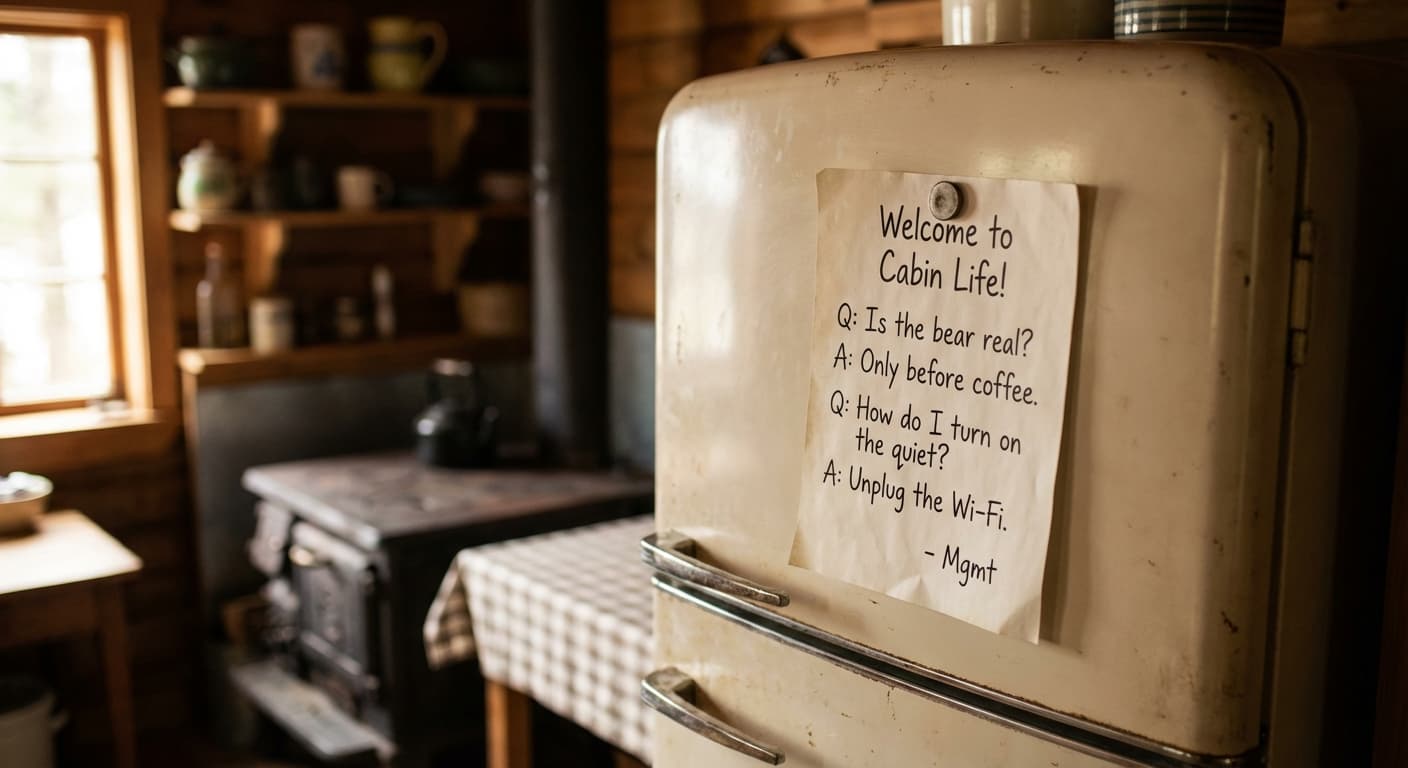
Every cabin owner hits the same wall. You're at home on a Tuesday night and your phone buzzes: "Hey, how do you turn on the hot water?" Two hours later: "Where's the wifi password?" Next morning: "Is the water safe to drink?"
You answer these same five questions for every group that visits, because the information lives in your head and nowhere else.
A house manual fixes this. Not a binder — nobody reads binders. A single page, maybe two, posted on the fridge or inside a kitchen cabinet. Just the stuff people actually need to know.
What Goes In It
Keep it short. If your manual runs longer than two pages, nobody will read it and you're back to fielding texts at dinner. Stick to what matters:
The basics:
- Wifi network and password (this is the first thing anyone looks for, every single time)
- How to work the heat and A/C, including quirks — "the thermostat takes 10 minutes to kick in" or "don't set it below 62 or the pipes get ideas"
- Hot water: how long it takes to warm up, any pilot light instructions, and tank size so people know not to take 45-minute showers back to back
- Where the breaker box is and which breakers go to what
Water and plumbing:
- Can you drink from the tap, or should people use the filter / buy bottled?
- Septic rules if you're on one — "no wipes, no grease, don't run the dishwasher and washing machine at the same time" (if you need a refresher yourself, see living with a well, septic, and propane)
- Where the water shutoff valve is, because when something goes wrong at 11pm, nobody wants to be searching for it with a flashlight
Around the property:
- Trash and recycling: pickup day, where the bins live, which bear-proof container to use (and whether bears are an actual concern or just a theoretical one)
- Firewood: where it's stacked, what to burn, how to open the flue
- Tricky doors, gates, or locks — the back door that needs a hip-check, the shed padlock combination, the garage door opener that only works if you hold it at a weird angle
- Parking: how many cars fit, where overflow goes
Local info:
- Nearest grocery store, with the actual drive time. "15 minutes away" and "45 minutes away" require very different trip planning.
- Nearest hospital or urgent care
- One good pizza place and one good breakfast spot — you know which ones
- Cell coverage: which carriers work, where the dead spots are, and whether the wifi calling workaround actually helps
Emergency contacts:
- Your number (or whoever should be the first call)
- A neighbor or local caretaker who can help when you're hours away
- The plumber, electrician, and propane company you've used before — names and numbers, not just "call a plumber"
What to Leave Out
Resist the urge to make it a guidebook.
- Long trail descriptions. Just list your favorites and maybe note which one's the easy loop.
- A full page of house rules. If you need that many rules, you might be inviting the wrong people. (The exception is a pet policy, which is worth having written down separately.)
- Detailed instructions for every appliance. Nobody needs a paragraph about the toaster.
- Property history. Fun over a campfire, but nobody's reading it off a laminated sheet at 10pm.
Format
A few things I've figured out through trial and error:
Laminate it. Unprotected paper lasts about one season before it's coffee-stained and curling at the edges. A laminated sheet on the fridge survives for years.
Big text, short bullets. People are scanning this after a long drive, usually while carrying bags in from the car. They need to find the wifi password in three seconds, not read an essay. Bold anything critical.
Put the wifi password in two places. On the manual and on a card near the router. People will still ask. But at least you can say "check the fridge" instead of typing it out again.
Review it once a year. That pizza place closes. Your plumber retires. The wifi password changes after you get a new router. A stale manual erodes trust — people stop checking it once they find one wrong number, and then you're back to the texts. I update mine during spring opening when I'm already poking around the property anyway. A good time to check what needs restocking too.
A Digital Backup Helps
If you use Cabyn, you can drop all of this into your property description so visitors see it before they show up. Means they can look up the wifi password from the confirmation email instead of hunting for the laminated sheet in the dark while holding a bag of groceries.
Both versions serve different moments. The online one is for planning ("what should we bring, is there a grocery store nearby"). The fridge one is for 10pm problem-solving ("why is the water brown" — air in the pipes, by the way, just run the faucet for a minute; put that in your manual too).
Write yours on the next rainy afternoon at the cabin. Takes maybe 30 minutes, and every text you don't have to answer this summer will remind you it was worth it.