What to Keep Stocked at the Cabin
The difference between 'grab your bags and go' and 'stop at three stores on the way' comes down to what's already at the cabin when people arrive.
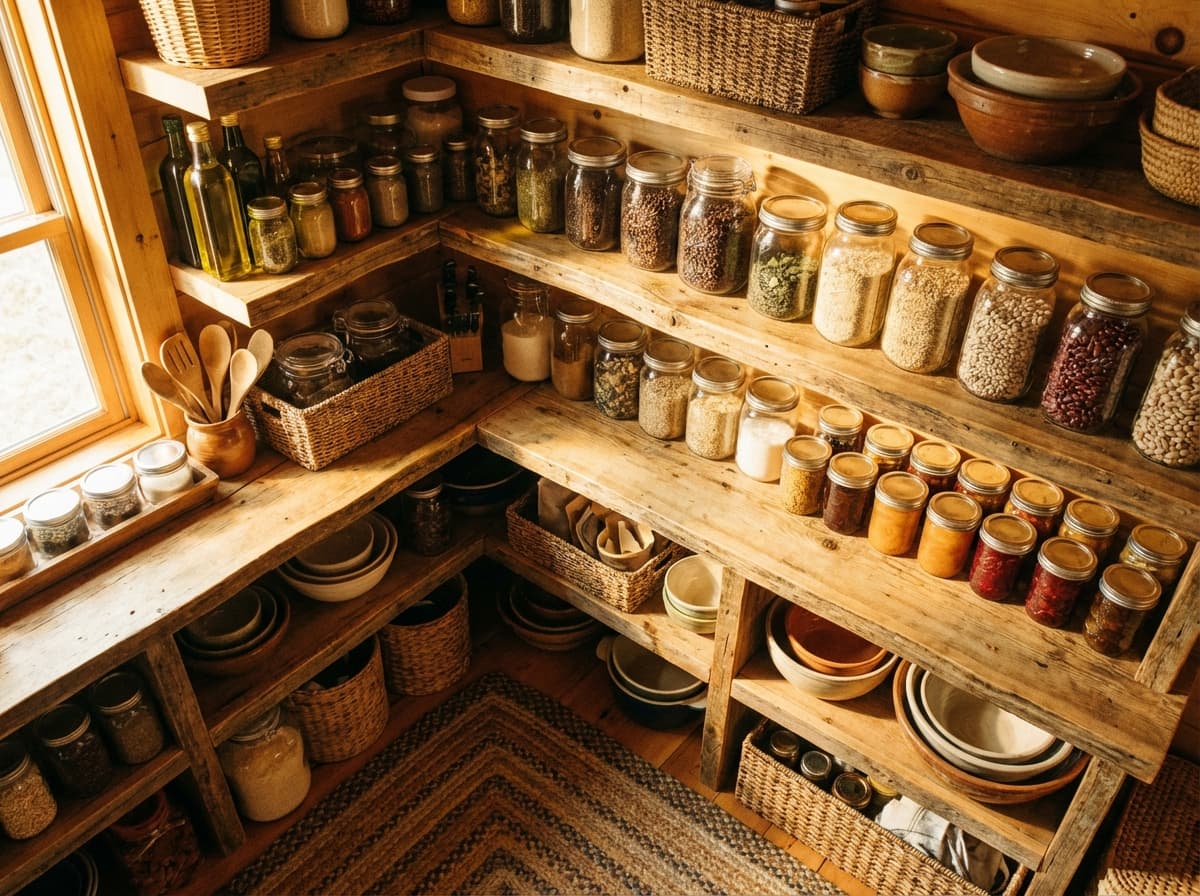
There's a moment on every cabin trip — usually about an hour after arrival, once the bags are in and someone's starting dinner — where you open a cabinet and discover there's no olive oil. Or salt. Or a can opener.
The stuff that lives at the cabin permanently makes the difference between a weekend that starts the second you walk in and one that starts after an afternoon detour to the nearest town. Get the baseline right and visitors can show up with their food and their clothes and not need anything else.
Kitchen Staples
These never leave the cabin. They get used by every group and running out of any single one is the kind of small annoyance that turns into a 45-minute errand.
Always stocked:
- Olive oil and vegetable oil
- Salt and pepper — get a pepper grinder; the pre-ground stuff goes stale in a month
- Sugar
- Coffee filters (or backup K-cups or a bag of beans, depending on your setup)
- Tea bags, basic variety box
- Spice rack: garlic powder, onion powder, paprika, Italian seasoning, red pepper flakes, cinnamon. Eight spices cover 90% of what anyone's cooking at a cabin. You don't need 30.
- Cooking spray
- Aluminum foil, plastic wrap, ziplock bags
- Ketchup, mustard, hot sauce, soy sauce — the condiments that live in every fridge forever
Seasonal or replace as needed:
- Butter (or leave a note reminding people to bring it)
- Flour if your guests bake, but check dates — it goes stale
- Pancake mix. I'm serious about this. Someone will want pancakes Saturday morning. This is the hill I'll die on.
The things every cabin is mysteriously missing:
- A can opener. Manual, not electric.
- A corkscrew and bottle opener
- One good knife. Every cabin has a drawer of dull blades that can't cut a tomato. Buy a single 8-inch chef's knife, slap a "DO NOT PUT IN DISHWASHER" label on it, and sharpen it once a year. This alone changes how people feel about cooking there.
- At least two cutting boards
- Measuring cups and spoons — people actually cook at the cabin, and they need to measure things
Cleaning and Consumables
This category causes the most friction when it runs out. Nothing deflates a cabin weekend like discovering the dish soap's been empty since October and there are two paper towels left on the roll.
Always there:
- Paper towels — at least 6 rolls; a full house tears through them
- Dish soap
- Sponges (swap these every season; they get horrifying)
- Trash bags. The one item people never bring and always need.
- All-purpose cleaner spray
- Broom, dustpan, basic mop
- Laundry detergent if you have a washer
- Toilet paper. Overstock this. There is no such thing as too much toilet paper at a cabin. Buy a 24-pack, put it in a closet, and forget about it until you need it.
Seasonal adds:
- Bug spray and sunscreen by the door (summer)
- Mouse traps and deterrents (fall)
- Ice melt for the steps (winter)
First Aid and Safety
You're farther from a hospital than you're used to.
Stock a kit: bandages, antibiotic ointment, ibuprofen, acetaminophen, Benadryl, tweezers, gauze, medical tape, hydrocortisone cream, a couple of instant cold packs, and an ACE bandage. Put it somewhere obvious and tell people where it is.
Beyond the kit: a flashlight with fresh batteries in a known location (not the junk drawer), extra batteries for everything, matches or a long-reach lighter, and a fire extinguisher in the kitchen. Check all of it once a year — medications expire, batteries corrode, and a first aid kit full of stuff from 2019 isn't helping anyone.
Rainy Day Supplies
Power goes out. Cell service is spotty. Three straight days of rain happen. You need some non-screen entertainment at the cabin or people start losing it by Saturday afternoon.
A shelf of books — doesn't need to be curated. The random accumulation of left-behind novels, bird field guides, and that one thriller nobody's heard of is part of the charm. Add a few good ones and let the collection grow on its own.
Board games and card decks. Scrabble, Catan, a standard deck of cards, a cribbage board if you're that kind of cabin. Don't overthink it. Accept that game pieces will disappear over time. Budget $20 a year to replace the worst casualties.
Extra blankets beyond what's on the beds. People want them on the couch, at the fire pit, on the porch. Cheap fleece blankets wash easily and get used constantly. Buy four more than you think you need.
Keeping It All Stocked
None of this matters if supplies run out and nobody notices until the next group arrives.
Stick a notepad or small whiteboard on the fridge, right next to your house manual, where people can write down what's running low. Check it every time you visit and resupply. Takes ten minutes to scan the list and add it to your next Costco run.
Buy consumables in bulk. Paper towels, trash bags, toilet paper, cleaning spray — they don't expire, you'll always need more, and buying in quantity twice a year is easier than picking up odds and ends every trip.
Some hosts build a small supply fee into bookings or earmark part of the suggested donation for restocking. Others absorb it as a cost of ownership. Either works. What doesn't work is expecting your visitors to replace what they use — they mean to, but they won't do it the way you want, and you'll end up with three bottles of the wrong dish soap and no paper towels.
Get the baseline inventory right once, then just maintain it. Your friends walk in, the coffee's there, the knives are sharp, the toilet paper is stocked. No frantic texts, no detours, no standing in the kitchen wondering who used the last trash bag. That's a cabin that's ready for people.