Living With a Well, a Septic Tank, and a Propane Tank
Most cabin owners inherit systems they've never dealt with before. Here's what you need to know about the three that keep everything running — and what goes wrong when you ignore them.
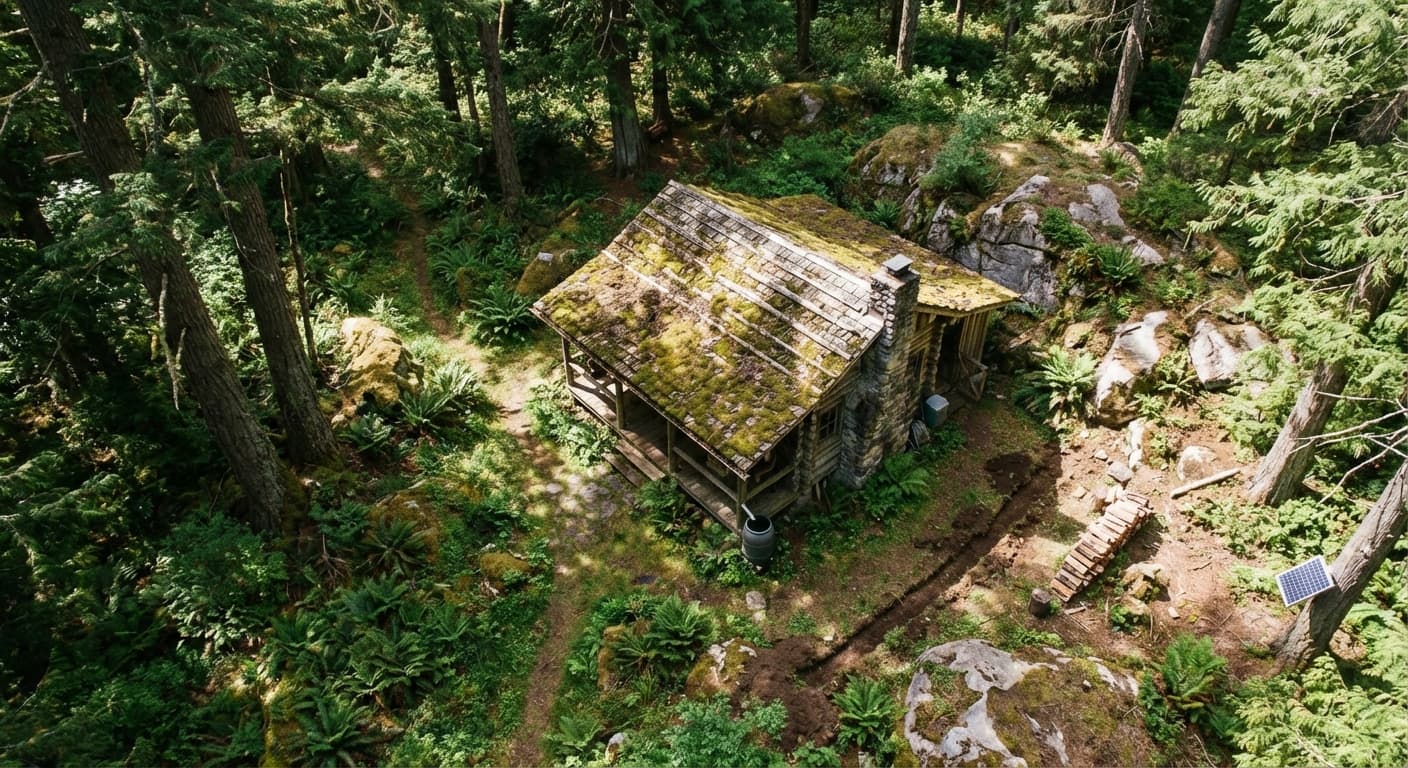
If you grew up in the suburbs, you probably never thought about where your water comes from, where it goes after the drain, or what heats the building. City infrastructure handles all of it. You pay the bill and everything works.
Then you buy a cabin.
Suddenly you're the one responsible for a well, a septic system, and a propane tank — three things you may have heard of but never managed. They're more straightforward than people expect, but they punish neglect. Quickly, and expensively.
The Well
Your well pulls groundwater up through a pipe using an electric pump. Water goes into a pressure tank in the basement or utility closet, and the pump kicks on to refill it when the pressure drops. That's the whole operation.
Test the water every spring. A basic kit from the hardware store or a local lab test runs $30-100. You're checking for bacteria (coliform, E. coli), nitrates, and pH. Don't skip this. Well water quality can shift year to year, and you want to know before someone drinks a glass of something they shouldn't.
No power means no water. The pump is electric. If you lose electricity — and most cabin areas lose it more often than you'd hope — nothing comes out of the faucet. A small portable generator that can run the pump is worth owning just for this.
Listen to the pump. When it's working right, you'll hear it kick on when someone opens a faucet and shut off once the pressure tank fills. If you notice it rapid-cycling — clicking on and off every few seconds — that's a bad sign. Usually a failing pressure tank or a leak in the line. Call someone before the pump motor burns out, because a pump replacement runs $1,000-2,000.
Know your well stats. Somewhere in your property records or inspection report, there's a well depth and flow rate. Shallow wells (under 100 feet) are more vulnerable to drought and contamination. Low flow rate means you can temporarily run dry if four people shower in a row. Just something to be aware of — stagger the showers.
For the most part, your well just works. Budget for a pressure tank replacement every 10-15 years, keep up the annual testing, and you probably won't think about it much. Which is the way it should be.
The Septic System
Everything that goes down a drain — toilets, sinks, showers, the washing machine — ends up in your septic tank. Solids settle to the bottom. Bacteria break things down. Liquid effluent flows out into a drain field, where it percolates through the soil and filters naturally.
Tank, drain field, gravity, bacteria. That's it.
The rules are short and absolute:
- Toilet paper and human waste go in. Everything else stays out. No wipes (not even "flushable" ones — they're not). No feminine products. No dental floss. No food scraps. This is the most common reason septic systems fail early, and it's 100% preventable. Put a small trash can in every bathroom and tell your visitors.
- Don't pour grease down the drain. It solidifies, floats on top of the water layer in the tank, and eventually plugs the outlet to the drain field. Keep a jar by the stove. When it's full, toss it in the trash.
- Easy on the chemicals. A little bleach is fine. But if you're regularly dumping drain cleaner or heavy-duty bathroom chemicals down there, you're killing the bacteria that make the whole system function. Use gentler stuff.
- Pump the tank every 3-5 years. This is the one maintenance item you can't skip. A pumping service comes out, sucks the accumulated solids out, and you're good for a few more years. Costs $300-500. Skip this long enough and solids overflow into your drain field — and replacing a drain field runs $10,000 to $30,000. The math is clear.
Find out where your tank and drain field are. A surprising number of cabin owners can't point to either. Don't park on the drain field. Don't plant trees near it — roots will find the pipes. And don't be surprised if the system is sluggish for the first week or two after the cabin's been sitting empty all winter. The bacteria need fresh input to stay active. It catches up.
The Propane Tank
Propane is probably your biggest utility cost. It runs the heat, water heater, stove, and maybe the dryer and fireplace. At our cabin, propane is about 60% of the annual operating budget in winter months.
A local company delivers fuel to a tank on your property — the big white cylinder outside. Check whether you own that tank or lease it from the propane company. Matters for maintenance responsibility and for switching providers.
The main thing: don't let the gauge drop below 20%. There's a percentage readout under a dome cap on top of the tank. Propane companies don't always do same-day delivery, and in deep winter when everyone's running low simultaneously, you might wait a week. Check the gauge every visit and schedule a fill at 30%. Or set up auto-delivery if your provider offers it — they estimate your usage and refill before you run out.
Lock in summer pricing. Propane fluctuates with the market. Most companies sell pre-buy contracts between May and August when prices are lowest. You pay up front for a fixed number of gallons at a locked rate and draw from that through winter. We've saved 25% some years this way, which on a $3,000 propane bill is real money.
Know the smell. Propane is naturally odorless, but they add mercaptan to make it smell like rotten eggs. If you catch that smell inside the cabin, open doors and windows, get everybody out, and call the propane company from the yard. Don't flip light switches or use anything that could spark. This isn't the time to troubleshoot — let the professionals handle it.
One more thing: if your water heater or furnace runs on a standing pilot light, it'll go out between visits. Relighting it is easy but different for every appliance. Put the instructions in your house manual so your guests don't have to figure it out in the dark. (We taped the instructions directly to the water heater, which has worked better than any manual ever did.)
Test the water, pump the septic, watch the propane gauge. When fall hits, close the property up properly so the pipes survive until spring. When spring comes, run through your opening weekend checklist to make sure everything survived the winter. If you do those three things on a schedule, everything else about cabin infrastructure mostly takes care of itself. And the next time someone asks "is the water safe to drink," you'll have an actual answer instead of a shrug.