When Two Groups Want the Same Weekend
Holiday weekends, summer Saturdays, school breaks — everyone wants the same dates at the cabin. Here's how to handle scheduling conflicts without making it weird.
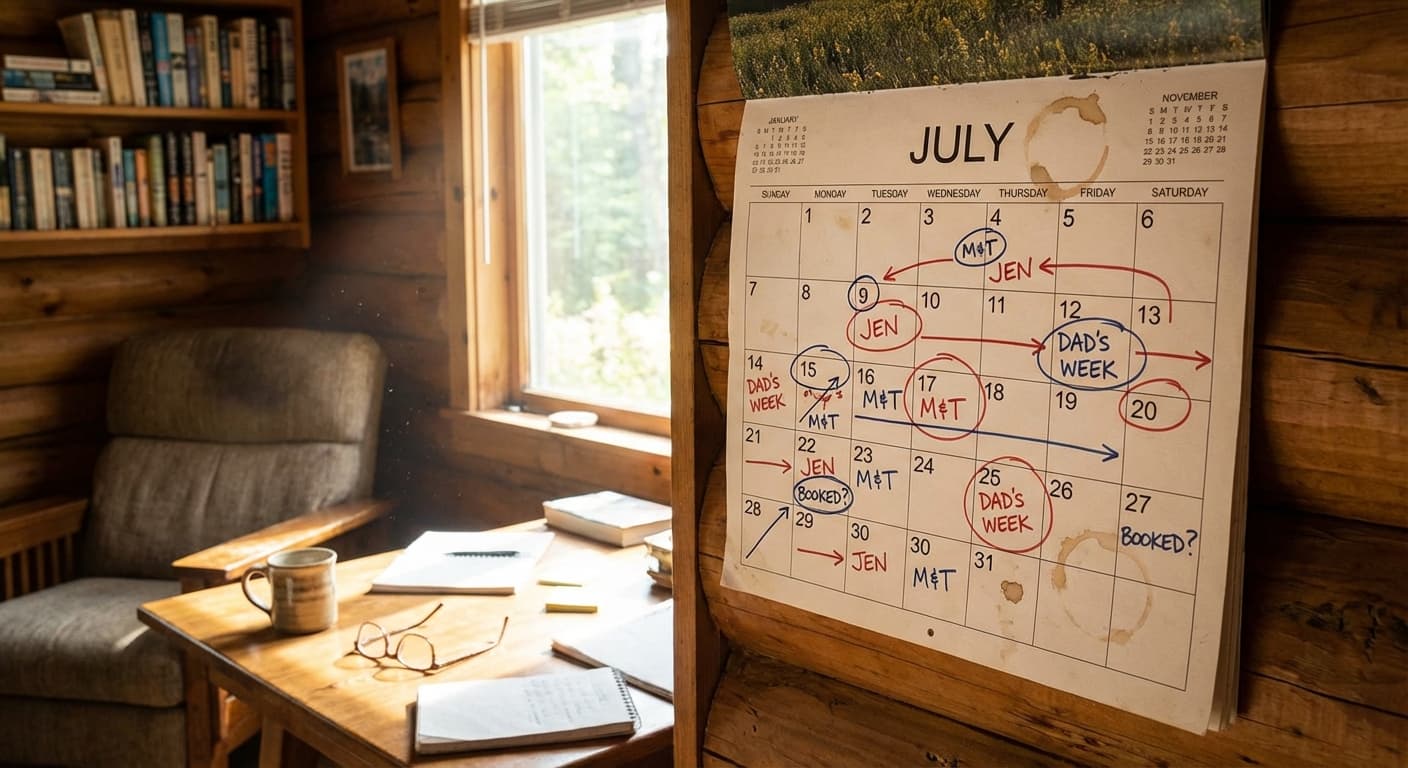
You have a cabin. You share it with family and friends. (If it's a family-owned lake house, that's its own beast.) And every year around Memorial Day, the Fourth of July, and Labor Day, you get the exact same problem: three groups all want the same weekend.
Nobody wants to say no. Nobody wants to feel like they got bumped. Handle it badly enough times and people just stop asking — which, honestly, is the worst outcome.
I don't have a perfect system for this. But I've screwed it up enough to know what helps.
First Come, First Served (With a Catch)
The simplest approach: whoever books first gets the dates. Open the calendar in January and let people claim weekends for the year.
This mostly works. But it has an obvious problem — the same organized, plans-everything-in-December types grab the best weekends every year, and the people who don't think about summer until May always get what's left. After two or three years of this, it starts to grate.
So pair it with a rolling priority. If your cousin's family had the Fourth of July last summer, other groups get first crack this time around. You don't need software for this — a shared note or a group text works fine. (On Cabyn you can set booking windows that give certain groups early access to specific weekends, which automates the whole thing, but a spreadsheet gets the job done too.)
Split the Big Weekends
Some weekends are just too popular for one group to claim. The Fourth of July is the classic.
Consider splitting it:
- Wednesday through Saturday — Group A gets the buildup and the fireworks
- Saturday through Tuesday — Group B gets the quieter stretch and misses the traffic
Neither half is perfect. Rotate who gets which half each year, and over two or three summers it more or less balances out.
Three-day weekends work the same way: Friday-through-Sunday, then Sunday-through-Tuesday. That Sunday overlap is either a shared handoff day or a quick turnover, depending on whether the two groups actually want to see each other. Which brings up the next thing.
The Overlap Question
Some hosts dread overlap. Others seek it out — two families at the cabin at once can be a great time if the space supports it and the people genuinely get along.
If your place sleeps eight-plus and the groups know each other, a shared weekend might be the answer nobody thought to suggest. Two families around the fire pit on the Fourth is arguably better than one.
But be honest about your space. One bathroom, sleeps four? Overlap isn't sharing — it's suffering. And some groups just don't mix. Your college friends and your in-laws might both be wonderful at the cabin. Just maybe not simultaneously. (My buddy Mike and my mother-in-law are both fantastic houseguests. Putting them in the same kitchen for three days would be a social experiment I'm not running.)
Have the Conversation in January
The worst scheduling conflict is the passive one. Two groups both assume they're coming, nobody confirms, and you find out the Thursday before when someone texts "so excited for this weekend!" and your stomach drops.
One message in January or February prevents almost all of this: "I'm opening up the cabin calendar for the year. If there are weekends you want, let me know in the next couple weeks so we can sort out overlaps before it gets awkward."
That's it. People feel included, they know the process exists, and if they miss the window, they can't reasonably be upset about it.
When Someone's Still Upset
Look, it happens. Your sister wanted Labor Day and didn't get it. Your college friend feels like he always ends up with the November weekends.
A few things that help:
- Name it. "I know you wanted that weekend — sorry it didn't work out this year" does more than pretending there's no friction.
- Offer something specific, not vague. Not "we'll figure something out" but "October 11th is open and the foliage is unreal that time of year — want it?" An off-season trip can end up being the one they talk about most.
- If someone ends up with a less popular slot, do something small. Stock the fridge before they arrive. Leave a note on the counter. Costs you ten minutes and signals that their visit matters even if they drew the short straw on dates.
And just be transparent about how decisions get made. It starts with being intentional about who gets an invite in the first place. People handle "we rotate the popular weekends" or "families with kids get priority during school breaks" just fine. What nobody handles well is feeling like the system is invisible and they keep ending up on the wrong side of it.
Scheduling a shared cabin will never be completely smooth. Too many people, too few summer Saturdays. But having any system — even a rough one — beats the alternative, which is everyone being polite about it until suddenly they're not.