The Case for the Off-Season Cabin Trip
Everyone fights over summer weekends. But the cabin in November, January, or March? That's when the place is at its most interesting.
Summer gets all the attention. Long days on the lake, warm evenings on the porch, kids out until dark. The weather cooperates, the property's at its most inviting, everything is easy. Classic cabin trip, and for good reason.
But if you only visit between June and August, you're missing the version of the place that might be better.
Off-season trips — fall, winter, early spring — are a different animal. Quieter. Slower. Nobody fighting over dates. And the cabin itself becomes the main event instead of just the place you sleep between lake days.
Fall: The Sweet Spot Nobody Uses
October and early November, after the summer rush but before the first hard freeze, is the best time at a lot of cabins. Almost nobody takes advantage of it.
The bugs are gone. That alone is worth the drive. No mosquitoes, no deer flies, no reapplying DEET every two hours. You can sit on the porch with a drink and not swat at anything for the first time since May.
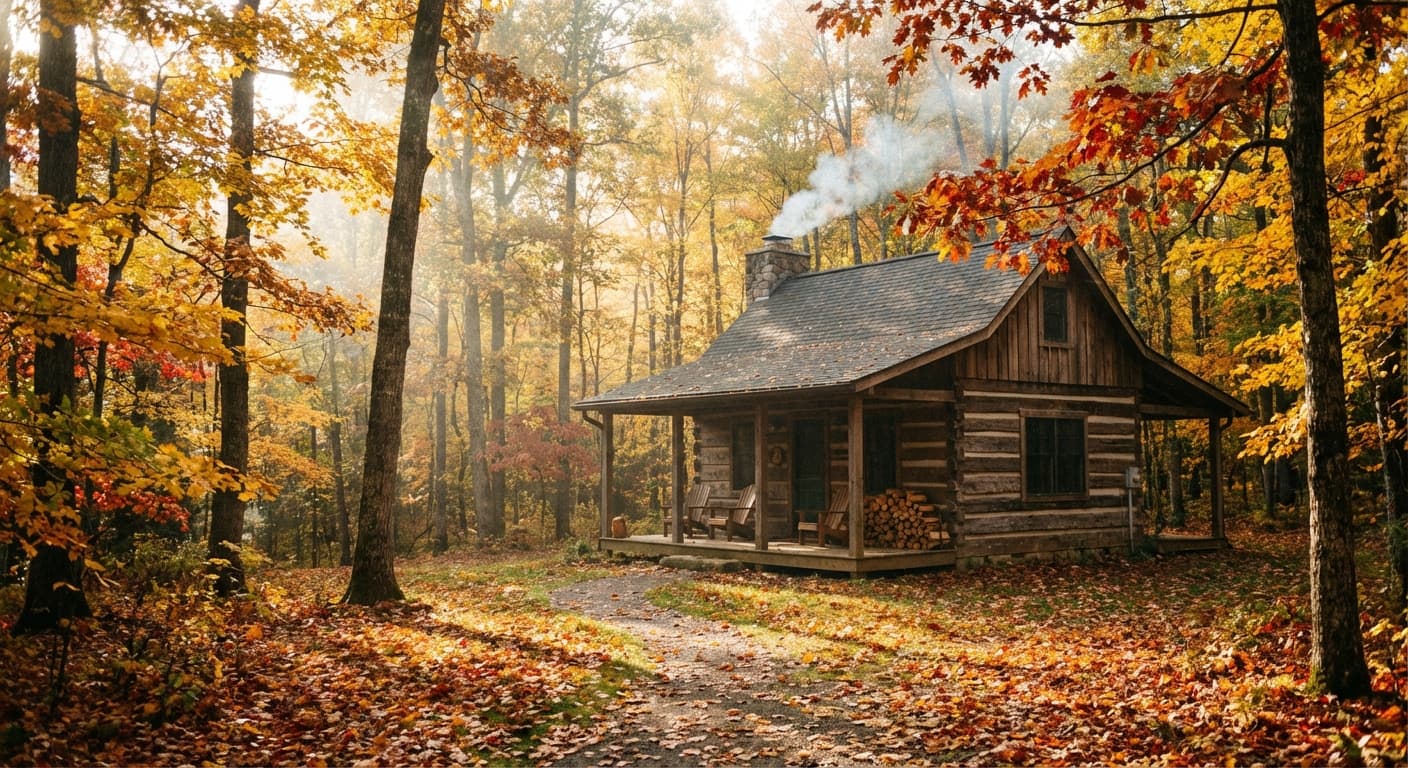
The light changes too. Late afternoon sun through turning leaves, hitting the cabin at that low autumn angle. If your place has any kind of view — lake, valley, ridgeline — fall light makes it look like a completely different property.
And the temperatures are perfect for being outside. Fifties and sixties during the day, thirties at night. Warm enough for a long hike without overheating, cool enough that the fire pit stops being a nice-to-have and becomes the centerpiece of every evening.
A few things to know:
- Firewood matters now. If you heat with a wood stove or use the pit heavily, fall is when that woodpile needs to be stacked and covered. Dry, seasoned wood makes all the difference. Green wood gives you smoke and frustration and not much else. If your guests are new to building a campfire, fall is a good time to walk them through it.
- Hunting season. Depending on your area, deer and turkey seasons overlap with peak foliage. Wear orange on public land trails. Not a joke.
- Short days. Sunset hits fast in October — by 6pm it's dark. Plan hikes for morning and lean into the early evenings. Cooking, games, fire. Nobody's complaining about being inside by 7 when there's a fire going.
Winter: The Cabin at Its Most Honest
Winter strips away all the easy entertainment. No lake activities. No long casual hikes. No grilling on the deck. What you're left with is the cabin itself — the fire, the kitchen, the people, and a kind of quiet that summer never offers.
Some people love this. Others lose their minds by Saturday afternoon. Know which one you are before booking a January weekend.
On the practical side:
- Heat is the whole game. Wood stove? Learn to run it before winter. Propane? Check the tank before you arrive — running out at 10pm when it's 15 degrees outside isn't an inconvenience, it's a real problem. Bring extra blankets no matter what.
- The water situation. If the cabin shuts down for winter, you might arrive to no running water. Some hosts keep the heat at a low idle to prevent pipe freezing; others fully winterize. Ask ahead of time so you know what you're walking into.
- Pack for the transition. You'll go between cabin and outdoors fifty times a weekend — fire pit, woodpile, car, back inside. The jump from a 70-degree living room to a 20-degree yard hits differently when you do it in socks. Keep boots, a heavy coat, and gloves staged by the door.
- Bring all your food. Summer has the "we'll figure out dinner" fallback — drive to town, grab takeout, find a restaurant. In winter, half those places are closed, roads might be icy, and you don't want to drive cabin roads after dark in January. Plan every meal and bring the groceries.
Winter activities that actually work at a cabin: snowshoeing, cross-country skiing, reading by the fire for four straight hours, cooking a meal that takes all afternoon, a board game tournament that gets weirdly competitive, sitting in the hot tub if you have one. The pace is deliberately slow. That's the point, not a problem.
Early Spring: The Messy Middle
March and April in most cabin country is mud season. Snow's melting, the ground is soaked, trails are swamps, and the landscape looks exhausted. Not exactly postcard material.
So why go?
Because nobody else does. The calendar is wide open. You'll have the place entirely to yourself, probably at zero scheduling pressure. And there's something particular about watching a property come back to life — first green pushing through brown, ice pulling away from the lake edges, birds you haven't heard in months. It's not beautiful in the traditional sense, but it feels like you're watching something start.
Check road conditions if your access road is unpaved — mud can get serious after rain or snowmelt. The cabin may still be in winter mode or just reopening for the season. Bug season hasn't started yet, which is an enormous perk if you've spent summers fighting mosquitoes. And the fire pit works just as well at 45 degrees as it does at 75.
Packing for the Off-Season
Different bag than summer. Things people consistently forget:
- Layers, not one massive coat. Base layer, fleece, shell. Covers everything from 50 degrees down to single digits depending on the combination.
- Wool socks. Multiple pairs. Cold feet will ruin an otherwise perfect weekend faster than anything.
- A headlamp. Shorter days mean more trips in the dark — woodpile, car, fire pit. A headlamp beats fumbling with your phone flashlight while carrying an armful of logs.
- A book you've been meaning to read. Off-season trips have more downtime, and that's the whole idea. Bring something real, not your phone.
- Indoor shoes. Slippers, camp shoes, whatever. You don't want to lace up boots every time you get off the couch, and walking around in socks on a cold cabin floor gets old fast.
Try one off-season trip. Pick a fall weekend when the leaves are turning, or a dead-of-winter Friday when the forecast says snow. If you hate it, fair enough — summer's always there. But the cabin in January, with the fire going and the snow coming down and actual silence outside the windows, has a way of becoming the trip you talk about longest.