Fire Pit 101: What Your City Friends Don't Know
Building a campfire isn't hard, but people who didn't grow up around them make the same mistakes every time. A practical guide for hosts and guests.
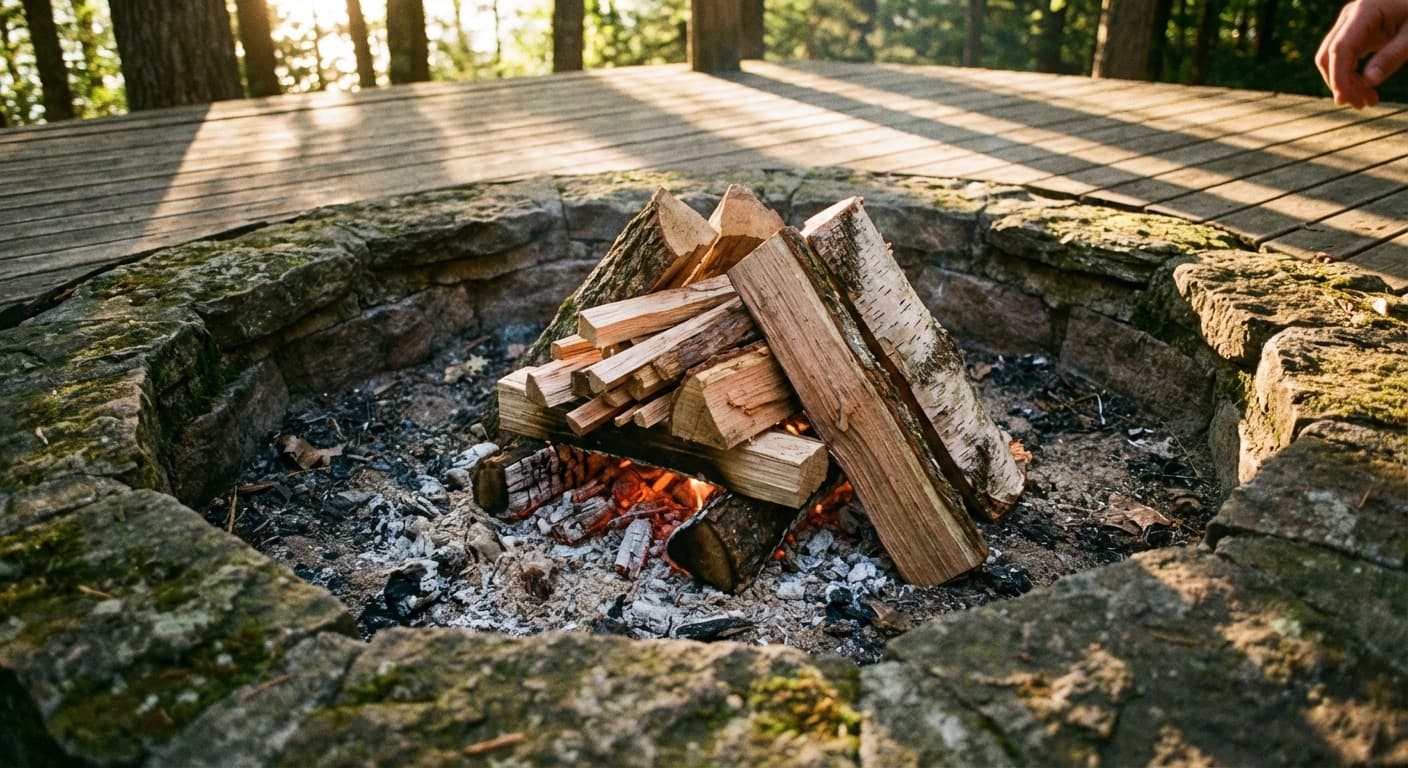
Your friend from Chicago just volunteered to start the fire. He's crumpling newspaper, stacking logs like a Jenga tower, and reaching for the lighter fluid. Stop him.
Building a fire isn't complicated, but people who didn't grow up around campfires or wood stoves make the same three mistakes every time. And since you're the one who owns the property, you're the one who deals with it when the fire pit cracks, the grass catches, or the entire firewood supply disappears in one evening.
Building a Fire That Actually Works
Forget the lighter fluid. It makes a dramatic whoosh, smells terrible, and doesn't help the fire once the accelerant burns off. It's a shortcut that saves no time.
What you need, in order: tinder, kindling, and fuel wood.
Tinder is the stuff that catches from a match. Dry leaves, birch bark, dryer lint if you brought some, crumpled newspaper. A small handful in the center of the pit.
Kindling is pencil-thin sticks and small splits of wood. Stack these in a loose teepee or log-cabin shape around the tinder. Loose is the key word. Fire needs air. The most common beginner mistake is packing everything too tight.
Fuel wood goes on after the kindling is burning well. Not before. Start with wrist-thick pieces and work up. If you throw a thick log on a pile of burning newspaper, you'll smother it every time.
Light the tinder at the bottom. Walk away for a minute. Come back and add fuel gradually. The whole thing takes about ten minutes if you're patient, and an hour if you rush it and restart three times.
The Firewood Situation
If you're a host: keep dry, split firewood under cover near the fire pit. A tarp works. A woodshed is better. Wet wood is the single biggest reason campfires frustrate people. (If you're thinking about what else to keep stocked at the property, firewood and fire-starting supplies should be on the list.)
If you're a guest: use the firewood that's provided and resist the urge to burn through all of it in one night. A good fire doesn't need to be a bonfire. Two or three logs burning steady is plenty for warmth. The host restocks that wood, and going through a full cord in a weekend gets old fast.
Never burn treated lumber, painted wood, plywood, or particle board. The fumes are toxic and the smell will clear the yard. Skip green (freshly cut) wood too. It hisses, smokes constantly, and barely produces heat.
If the property is in a state with firewood transport restrictions, and most states have them, don't bring wood from home. Invasive beetles travel in firewood. Buy it locally or use what's on site.
Placement and Safety
If you're setting up a fire pit on your property, where you put it matters more than what you buy.
- 10 feet minimum from any structure. House, shed, fence, deck. 20 feet is better. Embers travel farther than you expect.
- Check above. Low-hanging branches over a fire pit will scorch or catch. Trim anything within 15 feet overhead.
- Level ground. A pit on a slope means rolling logs.
- Wind. If you know the prevailing wind direction on your property, orient seating so smoke usually blows away from the group. You'll never fully escape it. But you can improve the odds.
The pit itself: a simple metal fire ring works fine. The fancy $300 stone pits look great but crack in freeze-thaw climates if they're not rated for it. A $60 steel ring from the hardware store lasts for years and you won't lose sleep over it.
Keep a bucket of water or a hose within reach. Not because you expect a problem. Because the one time you need it and don't have it will be memorable for the wrong reasons.
Putting It Out
This is where most people get lazy. The fire looks like it's dying, so they go to bed.
Don't. An unattended fire pit with embers can reignite from a gust of wind at 3 AM.
Drown it. Pour water on the coals until the hissing stops completely. Stir the ashes with a stick while you pour. Use more water than seems necessary. Then hold the back of your hand near the ashes (carefully). If there's any warmth, keep going.
Spread the coals first. Thin layer instead of a concentrated pile. A pile holds heat for hours.
If there's a fire ban in effect, skip the fire entirely. Check local conditions, especially out west during summer. A fun evening stops being fun when the fire department shows up.
For Hosts: Stock the Fire Pit Like You Stock the Kitchen
- Firewood, dry and split, within arm's reach.
- A lighter or long matches in a waterproof container. Don't assume guests will bring their own.
- A poker or sturdy stick for adjusting logs.
- A bucket that lives by the pit permanently. Not one that migrates to the garden shed.
- A few camp chairs. People sit around fires for hours.
If your property has a fire pit, mention it in the house manual. Include any local burn restrictions, where the firewood is stored, and how you want the fire handled before people leave for the night.