Co-Owning a Cabin Without Losing the Friendship
Going in on a cabin with friends or family can be great — until it isn't. How to structure the money, the schedule, and the expectations before things get complicated.
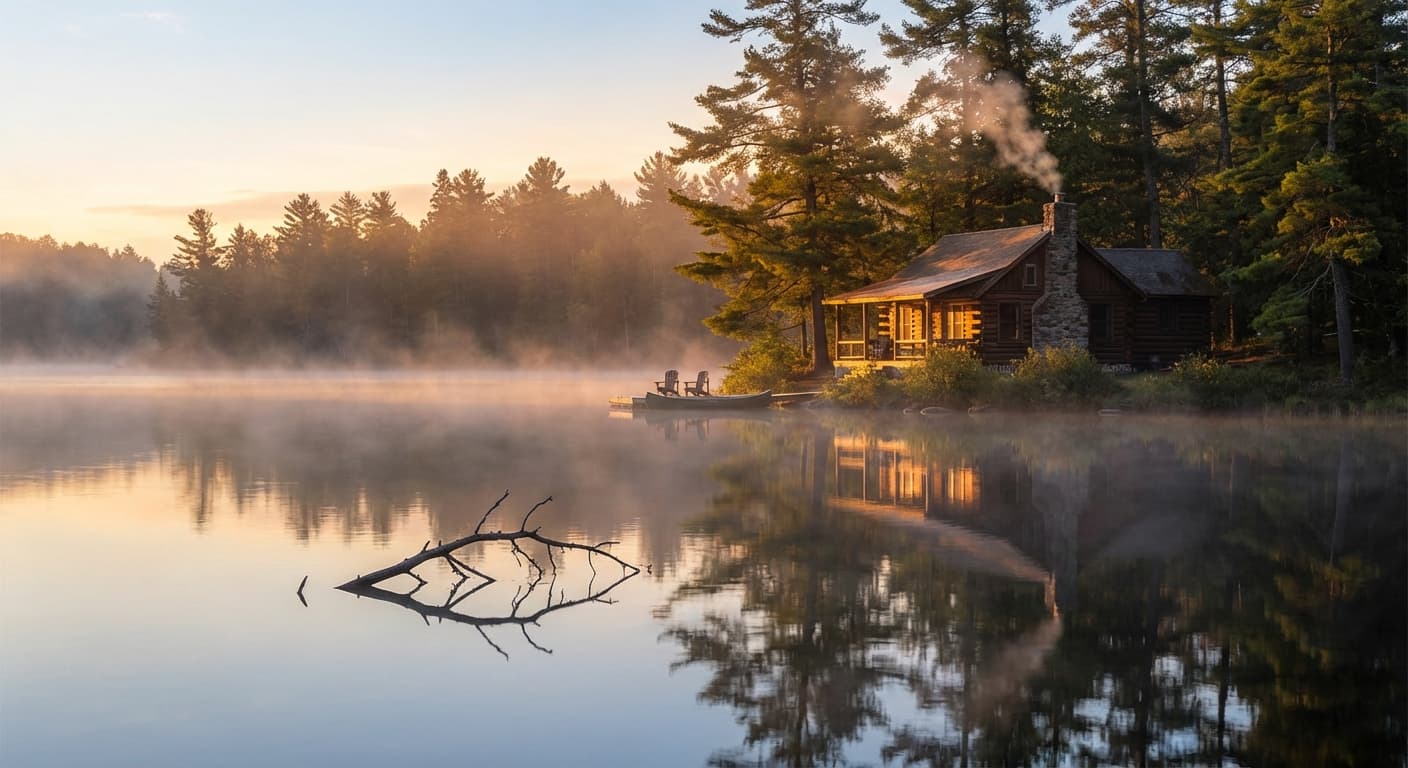
Buying a cabin with someone else makes a ton of financial sense. Split the mortgage, split the taxes, split the maintenance — suddenly a property that felt out of reach alone becomes completely doable. Three families go in together on a place by the lake and everyone's got a vacation home for a fraction of the price.
That part's straightforward. What's harder is staying friends through year five of shared ownership, when the novelty has worn off and someone's frustrated about the uneven propane bills.
I've watched this play out with friends (and family lake houses have their own version of this) and heard the stories from enough other owners to know the pattern. Year one is exciting. Everything's new, and the shared investment feels like a bonding experience. By year three, somebody's annoyed about paying the same amount as the family that uses the place twice as often. By year five, one party wants to redo the kitchen while the other thinks the money should go toward the roof. And somewhere along the way, somebody's kid spills red wine on the couch and nobody brings it up, and then it festers.
None of this is inevitable. But you have to talk about the uncomfortable stuff before you sign anything.
Put It in Writing
It feels wrong to draft an agreement with your brother or your closest friend. Feels like you're saying "I don't trust you," which is the opposite of why you're doing this together in the first place.
Do it anyway.
It doesn't need to be a 40-page legal document, though having a lawyer glance at it is worth the $500. At minimum, cover these:
- Ownership percentages. Who owns what? Might match what each person put in. Might not. Spell it out.
- Monthly costs. How are mortgage, insurance, taxes, and utilities divided? Proportional to ownership? Fifty-fifty? And what happens if someone can't pay for a couple months — is there a grace period, or does it shift the ownership math?
- Maintenance decisions. Who decides what needs fixing? Put a spending threshold in place: anything under $500, either party can handle it unilaterally. Over that, both need to agree.
- Usage schedule. How time gets divided. (More below.)
- The exit clause. What happens when one person wants out? Can the other buy them out? At what price — market, appraised, original investment? Right of first refusal? This is the clause nobody wants to think about when they're excited about buying a cabin together, and it's the one that matters most three or seven years down the road.
Write it. Sign it. Put it in a drawer. Hope it stays there. But if you need it someday, you'll be grateful it exists.
Split the Schedule Before You Need To
"We'll just figure it out as we go" is the most common plan for co-owned cabins. Also the one most likely to breed resentment by August.
What works:
Divide the calendar up front. Each owner gets certain weekends or weeks locked in at the start of every year. Holidays and prime summer weekends rotate — you got the Fourth this year, they get it next year. When conflicts still come up, having a system for when two groups want the same weekend helps. Off-season and midweek time stays open for whoever wants it.
Leave some weekends unassigned. Not every slot needs an owner name on it. Open weekends become overflow for when plans change, or guest weekends either party can use for hosting friends. (If you're ever tempted to list those open weekends on a platform like Vrbo to generate income, it's worth understanding what that tradeoff actually looks like before you go down that path with a co-owned property.)
Align on guest policies. This one sneaks up on people. Owner A fills their weekends with groups of eight. Owner B uses the place quietly with their spouse. Owner B comes back to a trashed kitchen every other Monday and says nothing about it for six months, then explodes. Sound familiar? Agree in advance on how many people each owner can bring, whether guests can come without the owner present, and what condition the cabin should be in at handoff.
A shared calendar helps more than anything else. Google Calendar, a spreadsheet, Cabyn's booking system — doesn't matter which. Both parties can see who's there when, no weekly texts required.
Money Will Be the Thing
The purchase is the easy financial decision. The slow bleed of ongoing costs is where partnerships crack.
Set up a joint cabin fund. Both owners contribute monthly — enough for regular bills plus a cushion for repairs. When the water heater dies in February, the money's already sitting there. Nobody's scrambling or feeling like they covered more than their share.
Track every dollar. And if you're hosting guests beyond co-owners, setting recommended donation amounts helps cover variable costs fairly. Shared spreadsheet, Splitwise, a notebook on the kitchen counter — pick something and use it. Log every propane fill, every repair call, every grocery run for cabin supplies. It feels like overkill right up until the moment someone says "I feel like I'm paying for everything." Then you pull up the numbers and have a conversation with facts instead of feelings.
No surprise renovations. This fractures more co-ownerships than anything. One owner decides the cabin needs a new deck. Gets quotes. Maybe even puts down a deposit. The other owner thinks that money should go toward a generator for power outages. Both are reasonable. But committing shared funds without the other person's agreement poisons everything — even if the deck turns out beautiful.
Rule of thumb: any improvement over $1,000 (or whatever number fits your budget) needs both parties to say yes before a check gets written.
When Usage Isn't Equal
One owner comes up 25 weekends a year. The other makes it 8 times. This is normal, and it's not a problem on its own. It becomes one when costs are split evenly and the lighter user starts doing the math on what each visit is costing them.
A few models:
- Equal split, period. Simplest. Works when both parties accept that ownership and usage aren't the same thing, or when usage is close enough that nobody cares.
- Fixed costs equal, variable costs by use. Mortgage, taxes, and insurance get split down the middle. Propane, electric, water, and cleaning scale to who was actually there. More bookkeeping, but fairer if usage is lopsided.
- Everything proportional to ownership. If one party owns 60%, they pay 60%. Clean, but doesn't account for who's there more.
No model is perfect. Pick one that feels close enough, try it for a year, and revisit. What you can't do is have no system and let the quiet math build up in someone's head all summer.
When Someone Wants Out
Life changes. Someone moves across the country, finances tighten, or the arrangement just stops working. It happens to good partnerships too.
If you wrote that agreement back in the beginning, you already know the playbook. If you didn't — and you're reading this after the fact — here's roughly how it goes:
The departing owner offers their share to the remaining owner first. Fair price. Get an independent appraisal if you can't agree — a real one, not a Zillow number. An appraiser costs $300-500 and takes the emotion out of it.
If the remaining owner can't afford the buyout, you sell the property together. Nobody wants this outcome, but having it on the table keeps the buyout conversation honest.
Give it time. "I want out" doesn't mean "I want out by Friday." Six months to a year is reasonable for both sides to sort out financing. Rushing helps nobody.
And keep talking through the whole thing. The co-ownerships that survive an exit — where the people stay friends afterward — are the ones where both sides said what they needed instead of what they thought the other person wanted to hear.
Write the agreement before you need it. Have the money conversation while everyone's still excited. Check in once a year about whether the setup still works. The cabin stuff is easy — it's the people stuff that takes effort. But a shared cabin with the right people, run the right way, is one of the best things you can own.