Cooking for a Crowd in a Cabin Kitchen
Your cabin kitchen fits two people comfortably. You've got eight coming for the weekend. Here's how to feed everyone without losing your mind.
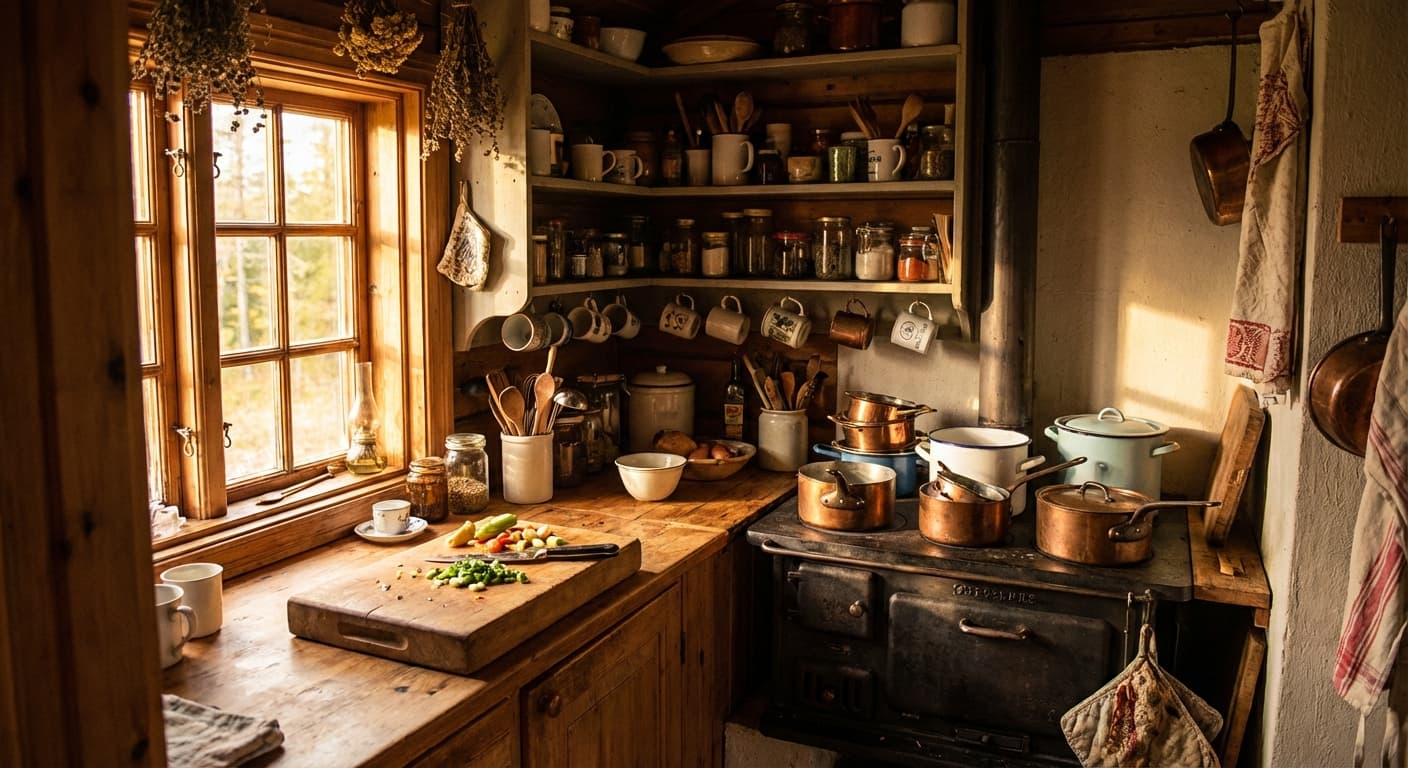
Cabin kitchens weren't designed for dinner parties. They were designed for one person making coffee and maybe scrambling some eggs. Then you invite eight people for the weekend, and suddenly you're trying to cook a real meal on two burners, with one cutting board, in a space where three adults can't stand at the same time without someone's elbow in someone's ribs.
Approaching it like you would at home — with the double counter space and the six-burner range you don't have — is a recipe for spending the whole trip stressed and annoyed while everyone else is on the porch having fun.
Plan Around What You've Got
Before you think about menus, take an honest look at the kitchen.
What you're probably working with:
- A 4-burner stove, maybe older, possibly with one burner that doesn't light right
- A single oven that may not hold temperature
- One or two counter surfaces, neither generous
- A fridge that's already full of everyone's drinks by Saturday morning
- A dishwasher that's either missing, ancient, or holds about four plates
Build meals around this reality. The goal is food that's good and easy to pull off in tight quarters — not a complicated dinner that proves you can cook.
One-Pot Meals Win Every Time
The best cabin cooking strategy: everything in one pot. Less prep, less counter space, less cleanup, and you can leave it going while you're outside doing something better.
Chili. The cabin meal. Make a huge pot Saturday morning, simmer it all afternoon, and it feeds everyone for dinner with leftovers for Sunday lunch. Cornbread in one pan alongside, or just set out tortilla chips and shredded cheese. Total active cooking time: 30 minutes.
Stew or soup. Same principle. Beef stew, chicken tortilla soup, white bean and sausage — one Dutch oven, a few hours of ignoring it, crusty bread on the side. Done.
Big pasta. Bolognese or sausage and peppers — sauce in one pot, noodles in another. Feeds ten for about $25 in ingredients. Garlic bread goes in the oven for the last ten minutes.
Tacos. Friday night arrival meal. Brown the meat, set out toppings, let everyone assemble their own. Twenty minutes of cooking, zero skill required, and nobody has to wait around hungry after a long drive.
The Grill Is Your Second Kitchen
If the cabin has any kind of grill — propane, charcoal, or a grate over the fire pit — use it. It moves cooking outdoors, frees up the stove for sides, and just feels like the right thing to be doing at a cabin.
Burgers and brats on Saturday night with the fire going is never wrong. But don't stop there — whole chickens on a charcoal grill, foil packets of vegetables, grilled corn, kebabs. If you've got the fire pit burning anyway, throw foil-wrapped potatoes into the coals. They take an hour and taste better than anything you'd make on the stove.
Bring your own charcoal if you're using a charcoal grill. Whatever bag's been sitting in the shed since August is damp and will fight you.
Stop Over-Producing Breakfast
Cabin breakfasts have a way of spiraling. Someone decides to do eggs, bacon, pancakes, fruit, toast — the whole spread — and suddenly one person is sweating over the stove for an hour while everyone wanders in at different times wanting slightly different things. It's exhausting and it happens every morning if you let it.
Self-serve approach: Put out bread, a toaster, butter, jam, yogurt, granola, fruit. Eggs and bacon available for anyone who wants to cook their own. Breakfast becomes a station, not a performance.
Make-ahead option: Overnight oats or a baked oatmeal assembled the night before. Warm it in the oven, put coffee on, set out fruit. Nobody cooks, everybody eats.
One big breakfast, once. If you want the full production — pancakes, eggs, everything — pick one morning. Make it an event. One person leads, others help, it takes an hour, and everyone understands it's not happening again tomorrow. Saturday morning works. Pancake mix is non-negotiable cabin inventory for exactly this reason.
Shop Before You Leave Home
The grocery store near the cabin is a gamble. There's a decent chance it's a tiny market that carries half of what you need at twice the price. Do your shopping in town before you leave, load the coolers, and arrive ready to go. Make sure you know what's already stocked at the cabin so you don't buy duplicates.
Bring more ice than seems right — coolers lose cold fast, especially when they're being opened every twenty minutes. Two bags per cooler as a starting point.
Plan for leftovers on purpose. They're not a failure. Leftover chili over baked potatoes on Sunday is better than trying to cook a whole new meal on your last day when everyone's packing up and half-checked-out.
And stock more snacks than feels reasonable. Chips, crackers, cheese, hummus, trail mix, fruit. Eight people at a cabin graze their way through the gap between meals at a rate that will surprise you. Buy the big bag.
Figure Out Dishes Early
The problem nobody thinks about until it's a problem: cleanup. At home, the dishwasher runs. At a cabin, it's hand-washing, and if nobody takes ownership, the sink is a disaster by Saturday dinner.
Simple rule that works: whoever cooks doesn't clean. Say it out loud. Most groups will step up without being asked twice. Keep a station going — wash, rinse, dry, put away — and it takes 15 minutes after each meal. Let it pile up and it takes an hour on Sunday, which is the worst possible time because everyone wants to leave. Even more reason to have a clear departure checklist in place.
Nobody comes to your cabin for the food. They come for the weekend. The food just has to be good enough that people are fed and simple enough that whoever's cooking actually gets to enjoy the trip. A big pot of chili, a grill going outside, and a counter full of snacks will carry you further than any ambitious meal plan.